
Oct 09
Beyond Cameras & Doors: Modern Security Services That Amplify Protection
In our first two posts, we covered Why Access Control Matters and 7 Questions to Assess the Health of Your …
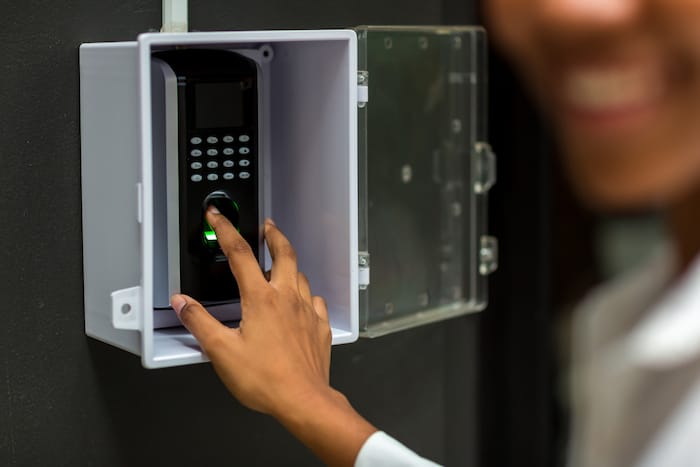
Traditional security tools are outdated. Badges are lost, PINs shared, and passwords reused, creating exploitable loopholes. These can lead to data breaches, operational disruptions, and increased organizational risk.
A biometric access control system provides a more secure and reliable method for verifying identity. By using physical or behavioral traits, biometrics closes gaps that traditional access control methods cannot address.
This article examines the operation of biometric systems, their advantages and limitations, compliance requirements, and best practices for implementing biometric controls to mitigate security risks.
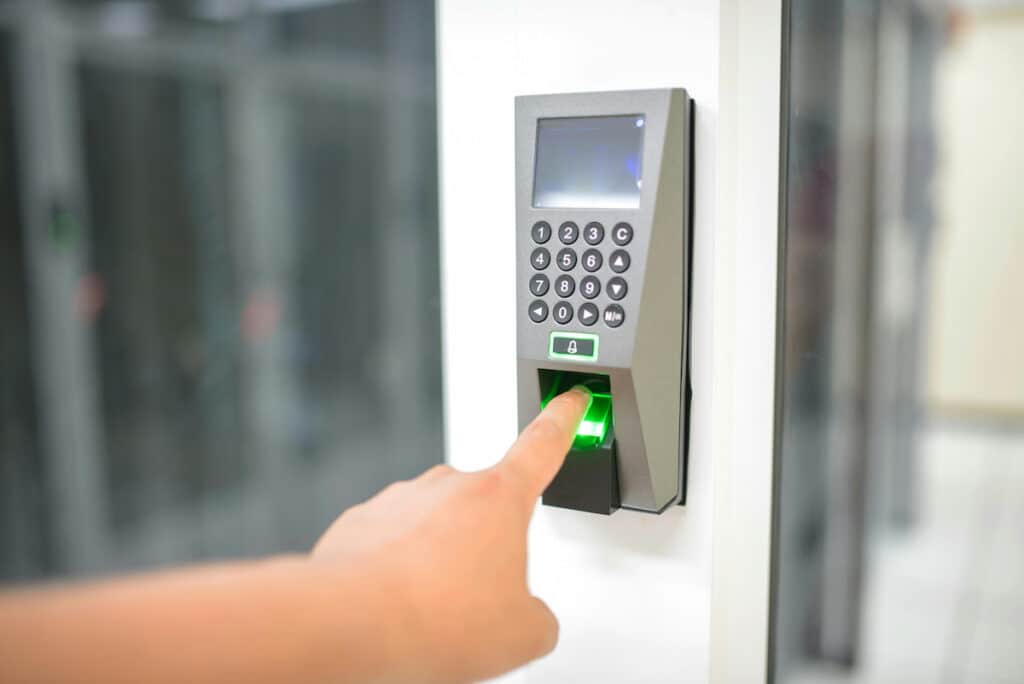
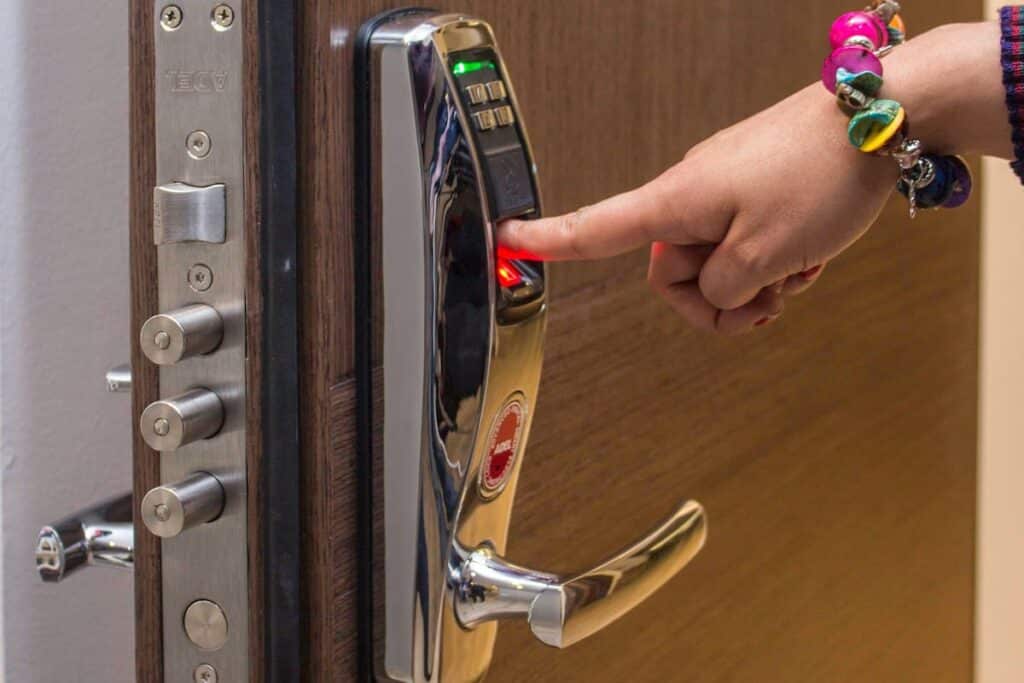
A biometric access control system uses unique human characteristics to authenticate a person before granting entry. Compared to older access control systems that use key cards and PIN codes, it verifies identity and grants access based on something you are, not something you know or carry.
When organizations deploy biometrics in security, they compare a live sample—such as a fingerprint or facial scan—to a stored profile. These types of security scans are commonly found in corporate offices, hospitals, data centers, government facilities, and other high-security environments.
System accuracy depends on two key measures: the false acceptance rate (FAR), which indicates the frequency at which an unauthorized user is mistakenly verified, and the false rejection rate (FRR), which means the frequency at which an authorized user is incorrectly denied.
Today’s security systems rely on diverse biometric access control solutions that authenticate users through unique characteristics.
Biometric systems don’t save actual fingerprint images or photos of your face. Instead, they convert unique features they capture—like fingerprint ridges or facial points—into a mathematical format known as biometric templates, which serve as encrypted reference points for authentication.
These templates use hashing and encryption to prevent reconstruction of the original biometric sample. This process strengthens privacy, minimizes risk, and ensures that sensitive biometric data remains protected even if a database is compromised.
These encrypted templates are then stored in a dedicated biometric database, an Automated Biometric Identification System, also known as ABIS, or on secured local servers, depending on the organization’s architecture.
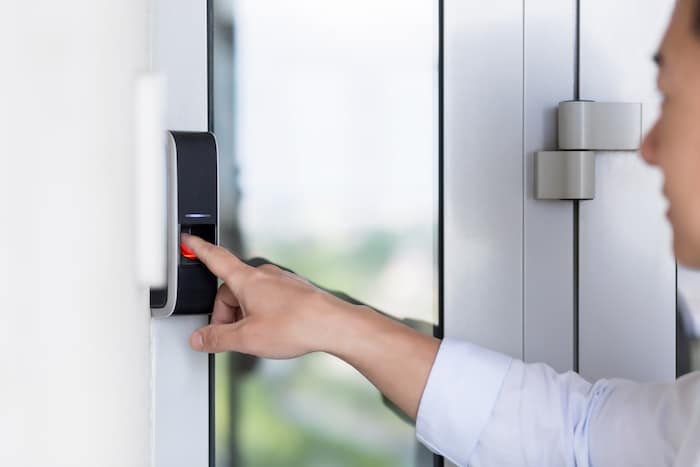
Organizations are now investing in biometrics to elevate security, improve identity assurance, and reduce dependence on vulnerable credentials. With the biometric security market projected to reach $140.58 billion by 2032, adoption accelerates as companies recognize the need for stronger access control.
While biometrics deliver stronger identity assurance, they also introduce operational, privacy, and technical challenges that organizations must manage carefully.

Biometric programs operate under strict privacy laws to ensure the responsible collection and use of data. Below are some legal guidelines organizations must understand and comply with when deploying biometric systems.
The U.S. National Institute of Standards and Technology (NIST) develops technical standards, guidelines, and testing frameworks for biometric systems. Its work supports nationwide efforts to improve biometric quality, ensure accuracy, and standardize system performance.
NIST standards are crucial because they enable different biometric systems to interoperate and exchange data reliably. While not a regulatory body, federal agencies and private organizations follow its guidelines for testing, performance, and quality benchmarks.
The General Data Protection Regulation (GDPR) is a European Union (EU) law that classifies biometric data as “special category data,” requiring explicit consent, a clearly defined purpose, and strong safeguards for collection, storage, and processing.
Its importance lies in its broad jurisdiction. GDPR applies not only to EU organizations but also to non-EU companies that offer goods or services to EU citizens or collect their personal data. This establishes the regulation as a global standard for the responsible handling of biometric data.
The Biometric Information Privacy Act (BIPA) is an Illinois state law that sets strict requirements for collecting, storing, and using biometric identifiers such as fingerprints or facial data. It requires written consent before collection and mandates public policies for the retention and deletion of data.
BIPA’s significance lies in its robust consumer protections and the legal consequences for noncompliance. It ensures that organizations handle biometric data transparently and prohibits the sharing or selling of biometric identifiers without proper authorization.
The Health Insurance Portability and Accountability Act (HIPAA) governs the protection of health information in the United States. When biometric identifiers are tied to patient data or used in healthcare workflows, they fall under HIPAA’s privacy and security requirements.
HIPAA is important because it enforces strict controls over how biometric-linked health information is stored, accessed, and transmitted. It ensures healthcare organizations maintain confidentiality and prevent unauthorized disclosure.
The California Consumer Privacy Act (CCPA) and its expansion, the California Privacy Rights Act (CPRA), regulate how businesses collect, use, and store personal data—including biometric information—from California residents.
These laws give individuals greater visibility and control over their data. They require organizations to disclose the information they collect, allow consumers to request deletion, and prohibit the sale of biometric data without proper consent. CPRA further strengthens enforcement and expands consumer rights.
Successful biometric deployment requires strong technical safeguards and clear organizational policies to avoid security breaches and ensure compliance.
Iris and vein recognition generally offer the highest accuracy because their patterns remain stable over time and are extremely difficult to replicate, making them ideal for high-assurance environments.
Compliance requires documented consent, encrypted storage, strict retention and deletion policies, and alignment with regulations such as the GDPR, BIPA, CCPA/CPRA, and HIPAA, as applicable.
Biometric templates are encrypted mathematical representations, not raw images, making them highly resistant to reconstruction. However, strong cybersecurity controls are still necessary to protect system infrastructure.
Initial costs vary by modality and scale, but organizations can offset this investment through reduced credential management, fewer security failures, and more efficient identity processes.
Sectors handling sensitive data or restricted environments—such as healthcare, finance, education, manufacturing, government, and critical infrastructure—see significant gains from adopting biometric authentication.
Traditional methods for credentials create predictable risks, from lost badges to shared PINs. A biometric access control system closes these gaps by strengthening identity verification, reducing credential misuse, and improving security across high-risk environments.
Implementing biometric technology means prioritizing compliance, given the highly sensitive data these systems capture. Working with cybersecurity, legal, and privacy teams ensures responsible deployment and alignment with all applicable regulatory standards.
S3 Technologies delivers scalable, compliance-ready biometric solutions designed for today’s evolving security landscape. Contact us today to deploy a future-proof biometric authentication system for your organization.
In our first two posts, we covered Why Access Control Matters and 7 Questions to Assess the Health of Your …

Every year in the United States, more than 312,000 manufacturing workers are injured on the job, more than 60,000 contract …
Seasonal employees, vacation schedules and adjusted work days, can make it a challenge to keep up with who is coming …

The one role in my life that I find to be the most rewarding is motherhood. Watching my kids grow …