
330-625-5227
industries

Augmented
/Virtual Reality
Solutions

Extended reality
applications
Augmented and Virtual Reality Solutions
overview

Emerging technologies go beyond problem solving to deliver a unique competitive advantage or creative business offering.

Join us at the Kent State Learning Innovations Conference for Makerspace Learning on November 4th!

AR / VR APPLICATIONS

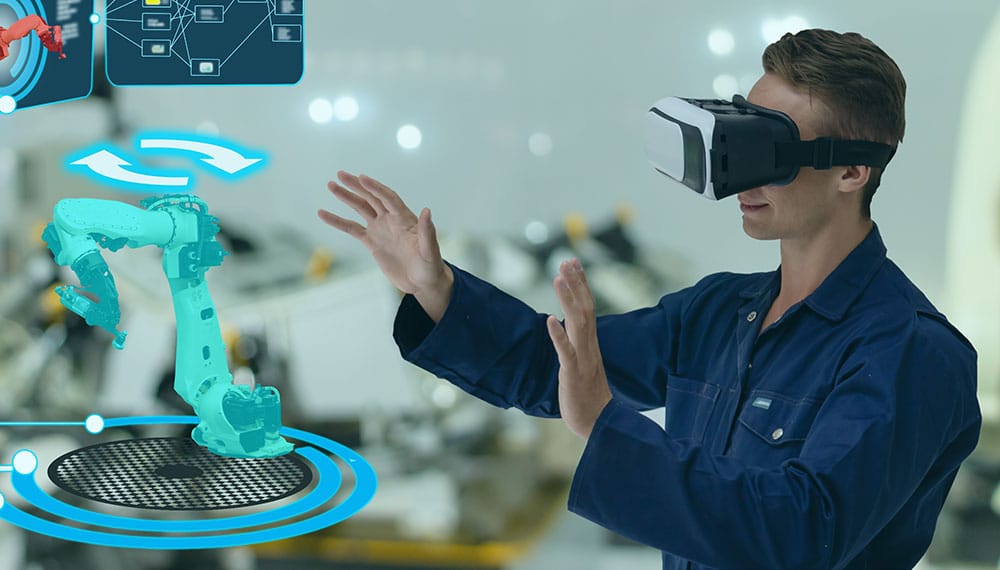
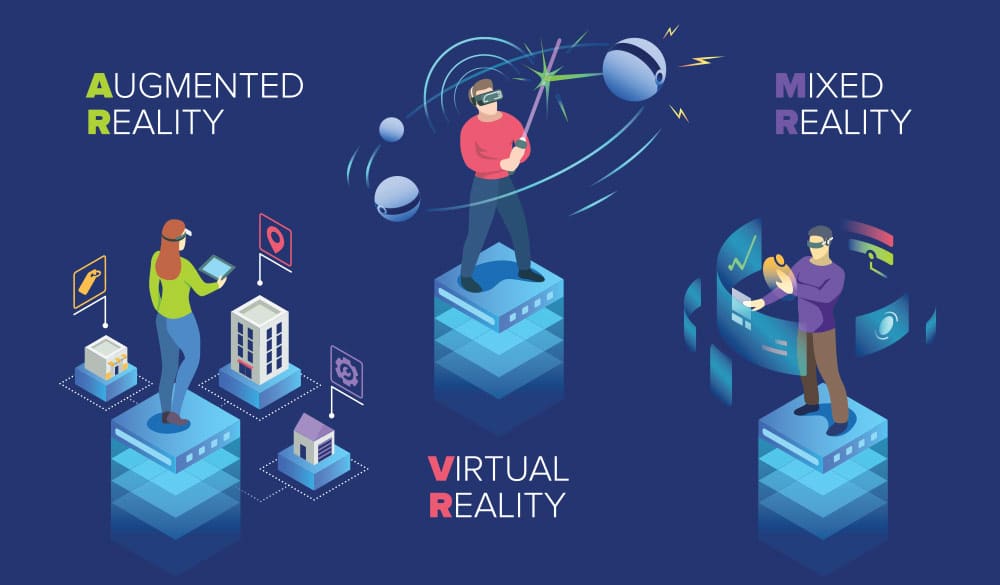
Immersive technology is the future of storytelling.  Use XR, referred to as extended reality (an all-encompassing term for virtual, augmented, and mixed reality) to enhance your marketing and digital signage, training, awareness, and understanding through designed experiences for virtually any industry.  Our design and implementation capabilities bring your products or services to life by combining the physical and virtual worlds for an experience your customers will never forget.

Additional emerging technologies such as facial recognition and projection mapping can integrate with other S3 solutions for a truly unique technological edge.

COMMERCIAL RELEVANCE

S3 Technologies is proud to announce that we have acquired New Territory, a leader in immersive technology experiences since 2017. To view some of their work to date integrating customized augmented and virtual reality technology in real-world business applications.

MORE POWER IN YOUR PALM

Our mobile application enables you to bring your brand to life with augmented reality by blending digital objects and messaging with the real world through a mobile device.  The S3 team creates a custom augmented experience which, combined with our proprietary analytics platform, gives you the keys to create a unique connection with your customers and understand how they are interacting with your brand.

Augmented and Vitual Reality

What are Integrated AR/VR Solutions?

Integrated AR and VR solutions are commercial-grade spatial computing systems permanently connected to an organization's secure network and AV infrastructure. Unlike standalone consumer devices, these systems are centrally managed, highly scalable, and built for complex environments like classrooms, control centers, and corporate training rooms.

What we often see is an organization purchasing dozens of VR headsets, only to realize their network cannot support the bandwidth, or their IT team cannot manage the devices securely. A true integrated solution ensures these spatial computing devices share data securely, sync instantly with room displays (like video walls or interactive smart boards), and operate without disrupting local network traffic.

Key Benefits of AR & VR in Your Facility

Deploying AR and VR technology transforms passive environments into active hubs for learning and collaboration.

  • Risk-Free Simulation: Facilities can conduct high-stakes training safely. For example, VR fire safety training enables personnel to interact with simulated fire hazards and extinguishing agents in a 360-degree environment, eliminating the logistical costs and physical dangers of live burning.
  • Advanced Remote Collaboration: Distributed teams can interact with 3D models in real-time. Utilizing 3D virtual tours and AR product experiences drastically increases user engagement and aids in faster decision-making.
  • Centralized Device Management: Connecting AR/VR hardware directly to your core network infrastructure allows for streamlined updates, usage tracking, and enterprise-grade security.
  • Enhanced Spatial Communication: Tie VR sessions directly into your facility's digital signage and video walls so that the entire room can participate in what the headset user is experiencing.

Industries We Serve: Real-World Applications

We adapt spatial computing and network infrastructure to solve specific operational, training, and communication challenges across distinct commercial sectors.

  • Commercial & Industrial: We deploy AR smart glasses and VR headsets for remote site walkthroughs, architectural planning, and industrial design. We integrate these tools directly with your core network to ensure fast, secure data access during complex field operations.
  • Education: We upgrade K-12 and higher education campuses with interactive spatial learning hubs. These systems allow students to explore complex STEM concepts visually, with hardware strictly locked down to secure, curriculum-approved network segments.
  • Gaming & Esports: We engineer the high-bandwidth, zero-latency network backbones required to support competitive AR/VR environments. Our integration seamlessly syncs headset feeds directly to arena-scale video walls, digital signage, and broadcast infrastructure.
  • Manufacturing: We implement AR overlay systems on active assembly floors. By connecting spatial hardware to your central production databases, floor workers receive hands-free, real-time schematic updates, heavily reducing manual assembly errors and downtime.

The S3 Technologies Integration Process

A successful spatial computing deployment requires careful planning across your entire technology stack. Here is how we ensure a reliable rollout:

  1. Site Assessment & Infrastructure Review: We evaluate your current AV setup, network bandwidth, and security protocols to ensure your facility can handle high-density AR/VR data traffic.
  2. System Design & Connectivity Planning: We map out exactly how the AR/VR hardware will interface with existing video walls, smart displays, and communication infrastructure.
  3. Deployment & Configuration: Our team installs the charging hubs, configures the devices for enterprise security, and ties them into your centralized IT management system.
  4. Testing, Training, & Handover: We test the network load, train your staff on operating the system, and provide a clear roadmap for ongoing support and scalability.

Why Choose S3 Tech for AR/VR Integration?

Most AV providers only install screens. We approach AR and VR as part of a complete technology ecosystem.

We understand that a spatial computing system is only as good as the network supporting it. With extensive experience deploying multi-site technology ecosystems, we focus on long-term reliability. 

We ensure your new AR/VR investment integrates smoothly with your existing access control, emergency communication systems, and daily AV workflows. It is not about selling you the latest headset; it is about building a secure, scalable system that your staff can actually use without constant IT intervention.

Frequently Asked Questions

Commercial AR/VR systems require dedicated, high-bandwidth network segments to function without lag. We assess your current infrastructure to ensure spatial computing data traffic does not disrupt your existing daily operations, security systems, or communication networks.

Standalone headsets introduce massive security vulnerabilities. We integrate these devices directly into your centralized IT management system. This approach restricts user access to authorized applications only and isolates data traffic to maintain strict compliance.

Yes. We configure spatial computing hardware to sync directly with your current video walls, smart boards, and digital signage ecosystems. This setup allows participants without headsets to see and engage with the 3D content in real time.

The upgrade makes sense when your operations face distinct communication bottlenecks with 2D media. If your team relies on expensive physical prototyping, requires hands-on training in hazardous environments, or struggles to collaborate on complex spatial designs remotely, an integrated AR/VR system provides a practical operational advantage.

We eliminate the need to manage devices one by one. During integration, we deploy centralized management consoles and network-connected charging hubs. This infrastructure allows your IT staff to push software updates, monitor device health, and track usage across the entire campus from a single secure interface.

contact us

Let’s discuss what technology solution we can deliver for you.