
Mar 23
AV Planning for School Budgets 2026–27: Smarter Technology Guide
Classroom learning today goes beyond textbooks and chalkboards. It’s interactive, visual, and powered by audiovisual (AV) tools that make lessons …
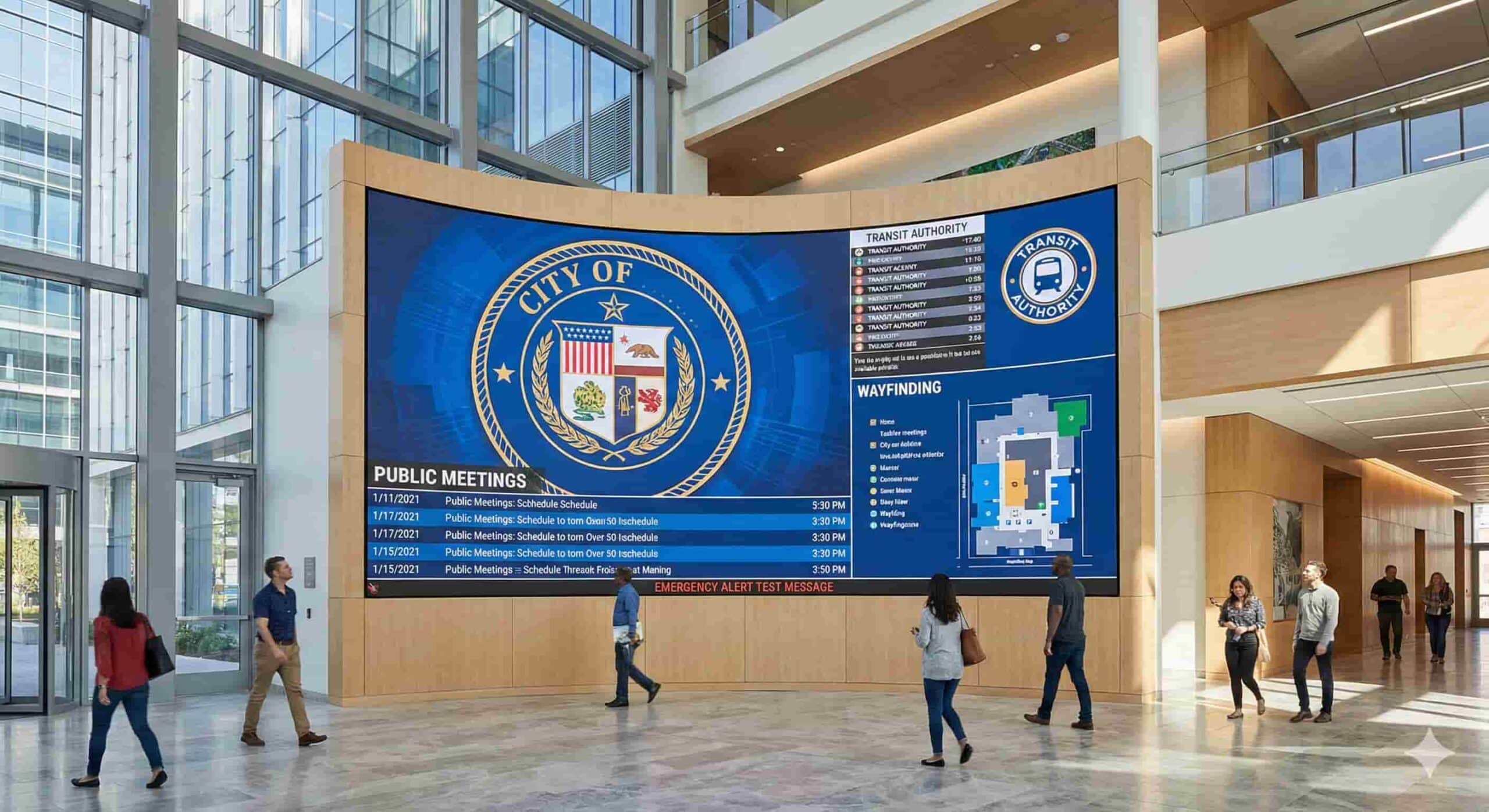
Public sector agencies bear the weight of protecting communities and delivering services. Leaders depend on clear visual intelligence to act quickly. And in critical moments, a split-second delay can derail the whole operation.
LED walls for public sector operations transform how agencies see and respond to information. They convert complex data into a real-time situational view, enabling teams to monitor situations and communicate across departments.
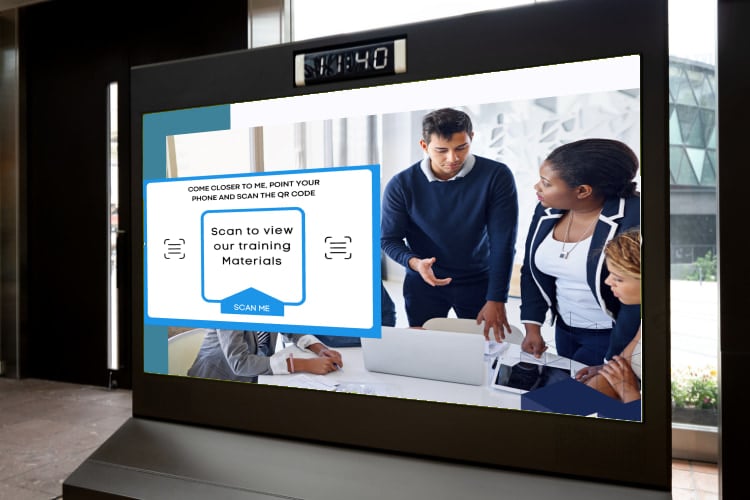
An LED wall is a large-scale display technology made of individual light-emitting diode (LED) panels. These panels link together to form a seamless screen of any size or shape, and deliver high-definition contrast and color.
LED walls outperform traditional displays in public sector operations due to their large-scale visibility, high brightness, modular design, and 24/7 reliability. The comparison below outlines the key differences between LED screens and video walls.
| Feature | LED Wall | Traditional Display (LCD Video Wall) |
| Visibility | Large-scale, clear viewing from anywhere in the room, even at wide angles | Visibility decreases at distance and across seams |
| Modular Design | Highly modular with flexible sizing and custom layouts | Fixed panel sizes limit layout flexibility |
| Brightness | High brightness, readable in brightly lit control rooms | Bright, but less effective in highly-lit environments |
| Contrast | Higher contrast for sharper visuals and deeper blacks | High contrast, but limited by panel borders |
| Durability | Built for continuous, mission-critical use | Designed for extended use but less rugged |
Moreover, these high-resolution LED walls can easily integrate with existing audio-visual (AV), security, and Geographic Information Systems (GIS), making them the backbone of modern situational awareness.
Government agencies face unique challenges that demand fast coordination and clear visibility. LED walls can definitely address these needs across multiple environments.
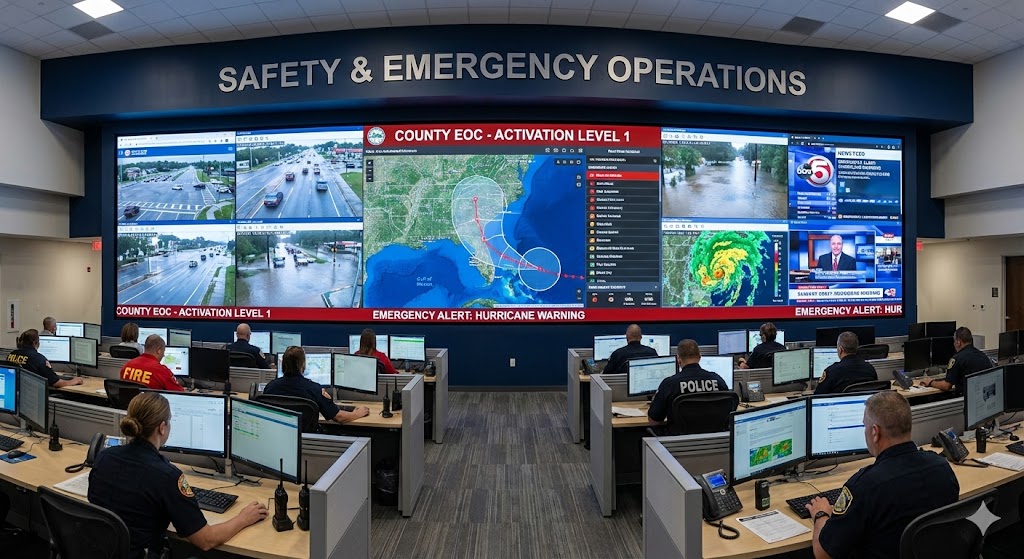
Emergency Operations Centers, or EOCs, often struggle with fragmented information and disrupted communications during crises, which can lead to delayed responses.
LED display solutions for emergency operations address this by consolidating data and creating a single visual command view. Teams monitor live updates, track incidents, and coordinate resources simultaneously on a single screen.
The result is a unified team that acts faster, coordinates efficiently, and improves safety outcomes during high-pressure situations.
Command centers frequently battle “data fatigue” and “alert fatigue” from monitoring too many separate systems and receiving security incidents. Operators can miss critical alerts, increasing stress and the risk of oversight.
LED walls for command centers present multiple live feeds simultaneously, including surveillance video, system dashboards, and metrics. With that, leaders gain a shared operational picture across the room.
This creates a streamlined environment where operators detect anomalies immediately, and leaders make informed decisions. Situational awareness improves, allowing for proactive rather than reactive measures.
Many government facilities still rely on outdated hardware (i.e., projectors) and software to manage public information, operations, and interdepartmental coordination, failing to support group briefings or real-time updates.
LED video walls for government facilities provide clear visuals for meetings, traffic management, public alerts, and infrastructure monitoring. For city halls and municipal operations, LED walls modernize public engagement and streamline legislative sessions.
Agencies benefit from improved communication, stronger public trust, and more efficient internal workflows.
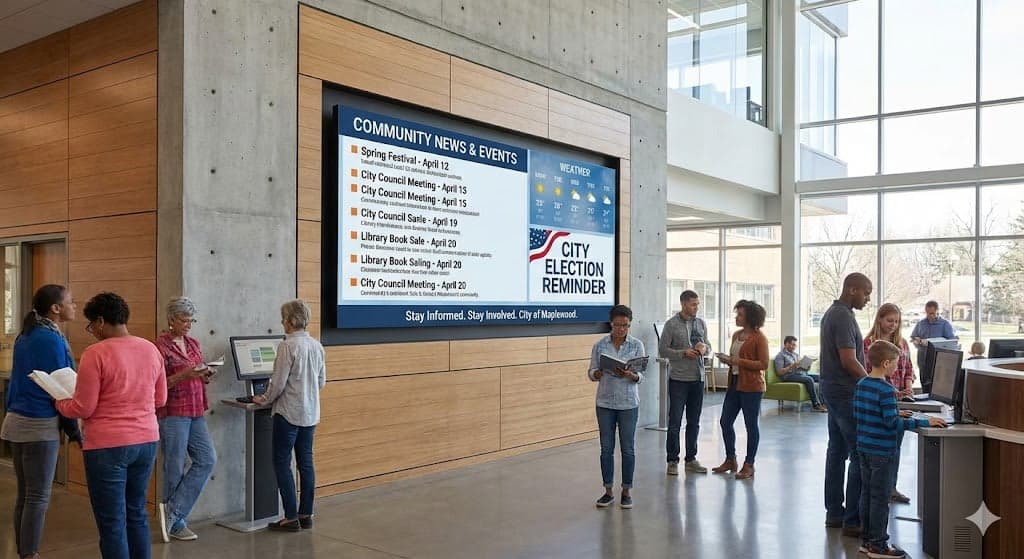
Visual clarity from LED walls improves the speed and accuracy of operations in the public sector, providing the detail needed to interpret complex scenarios instantly. They help agencies by:
Selecting the right LED wall requires careful planning and expert advice. Balancing the technical specifications is a strong investment that can benefit the public for years to come. Here are a few important considerations to keep in mind:
Installing advanced visualization technology is an investment in public safety and operations, empowering the public sector to work smarter, faster, and more cohesively.
LED walls for public sector operations are more than just screens—they are essential tools for modern governance. Consulting with an expert early, like S3 Technologies, can help assess your facility’s needs and build a clearer future for your community.
Yes. LED walls can show dashboards, live video, maps, and alerts simultaneously from multiple systems.
Yes, LED technology stands as the most energy-efficient solution available today. These systems offer superior durability and longevity compared to traditional displays.
According to industry standards, high-quality LED walls last 8-12 years. Most LED chips operate for 80,000 to 100,000 hours before their brightness fades to half.
Yes. LED video walls for government facilities integrate with cameras, access control, GIS, and AV platforms.
Maintenance is minimal. Routine inspections, software updates, and occasional module servicing help maintain consistent performance.
Classroom learning today goes beyond textbooks and chalkboards. It’s interactive, visual, and powered by audiovisual (AV) tools that make lessons …
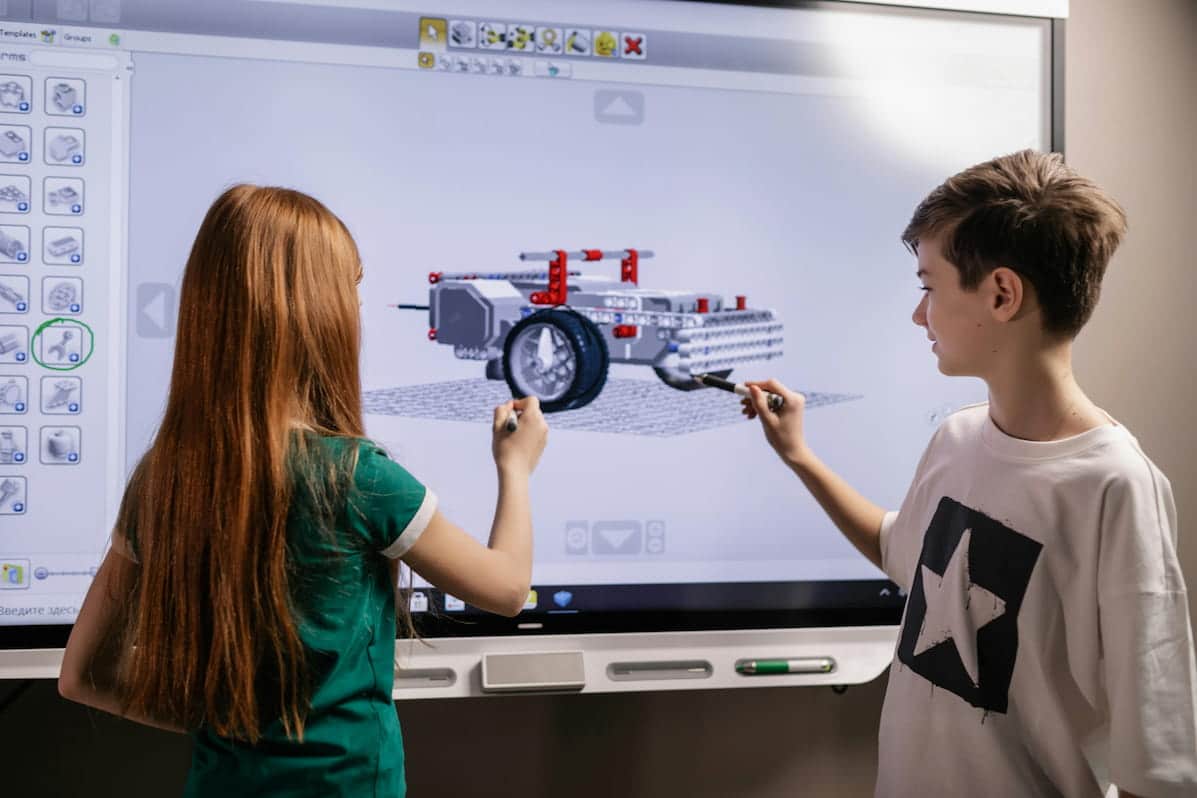
Attention is hard to capture and even harder to keep. In classrooms, students tend to lose focus when lessons feel …
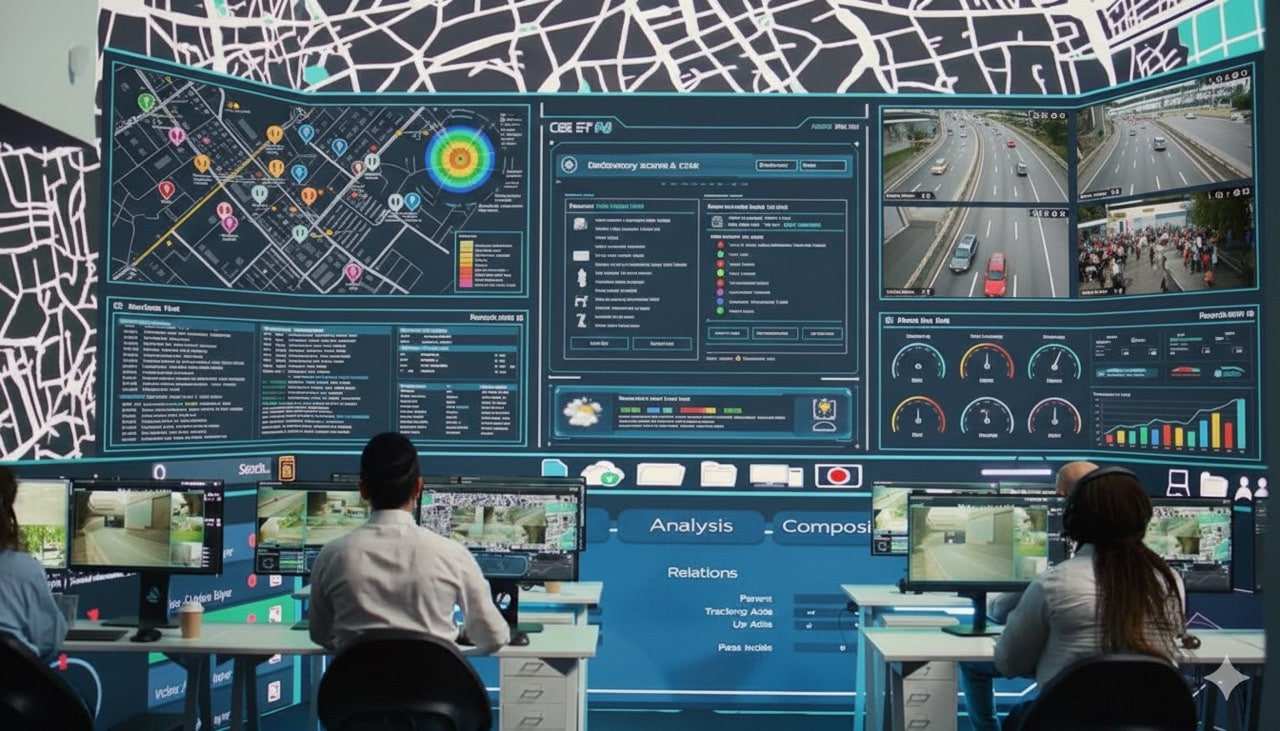
In emergency response environments, decisions are made in seconds. For 911 call centers, public safety answering points (PSAPs), emergency operations …