
Apr 01

From Posters to Platforms: Evolution of Workplace Safety Communication
Bulletin boards, printed manuals, and posters near break rooms or production floors were once the standard for sharing safety messages …
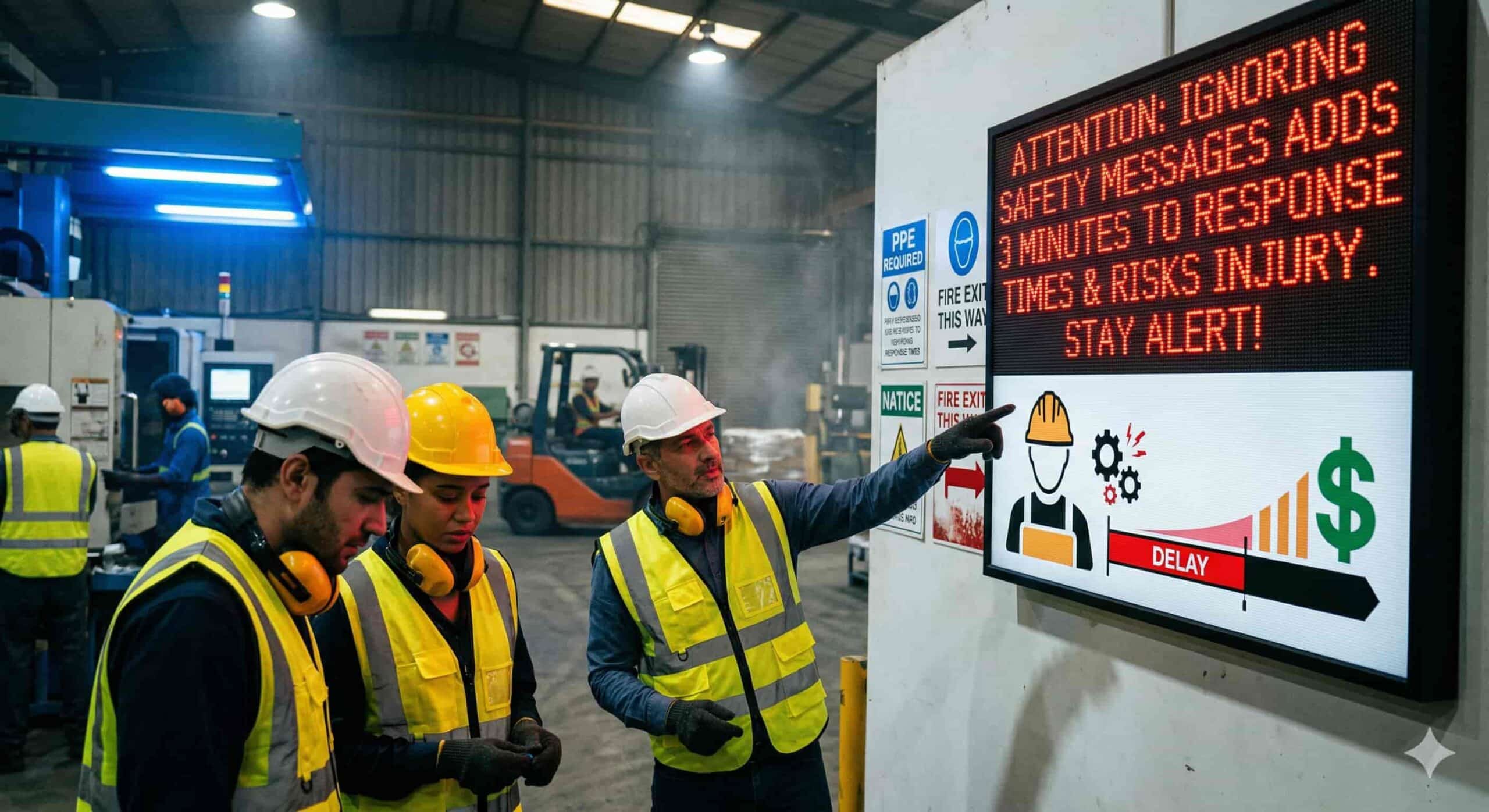
Safety signs, policies, and reminders exist for a reason: to prevent injuries and protect employees. Yet incidents still happen. Why? It’s rarely the policy that fails. It’s the message that never truly lands.
Ignored safety messages are one of the most overlooked drivers of workplace risk, and most organizations don’t realize the cost until something goes wrong.
If you manage safety, risk, or operations, you need to understand what ineffective communication actually costs and what smarter organizations are doing to address it.
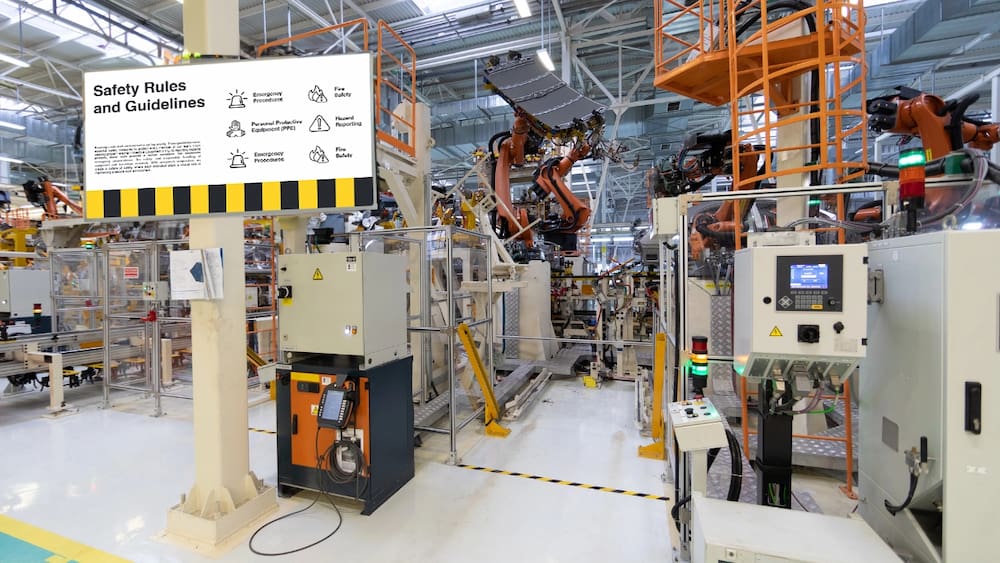
Let’s be direct: workplace safety communication failures are expensive, and the costs can go beyond the incident itself.
The National Safety Council reported that workplace injuries cost U.S. employers $170 billion annually in medical expenses, wage losses, and productivity decline.
The cost of safety negligence is already built into most organizations’ risk profiles, whether they realize it or not. Here’s where it hits the hardest:
Traditional workplace safety signage has served organizations for decades. But they were designed for a different era. Today’s workforce and work environments demand more than just a laminated poster. Here’s why:
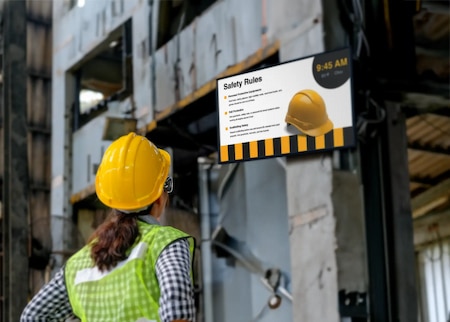
Digital safety communication platforms don’t replace a sign, they fundamentally change how safety information moves through your organization.
Digital safety displays allow safety teams to push emergency updates instantly across all screens in a facility. Whether it is a spill on the floor, a chemical release, or an active evacuation, real-time alerts reach workers precisely, effectively mitigating and preventing occupational risks.
Digital platforms can automate the rotation of OSHA-required messages, ensuring hazard communications stay current and visible. This automation builds consistency into the system, removes human error, and creates an integrated hazard messaging system that regulators can audit.
Short and frequent learning messages reinforce safe behaviors over time without overwhelming employees. Digital screens can deliver targeted content like PPE reminders before shift start, hydration prompts during peak heat, and near-miss awareness campaigns. These small touchpoints build safer habits over time.
Risk management technology enables organizations to track message delivery, screen engagement, and compliance acknowledgment across the facility. Analytics dashboards identify coverage gaps, highlight high-risk areas, and provide safety leaders with evidence of program effectiveness for internal use and regulatory oversight.
The experience of a space park in California shows what this shift looks like in practice. Static signage was failing to reach a large, distributed manufacturing workforce consistently.
Through a digital signage platform, they ran a targeted safety campaign, including a slips, trips, and falls initiative — delivering real-time, location-specific messages directly to workers on the floor. The result was a measurable improvement in risk management outcomes and a communication channel that employees actually engaged with.
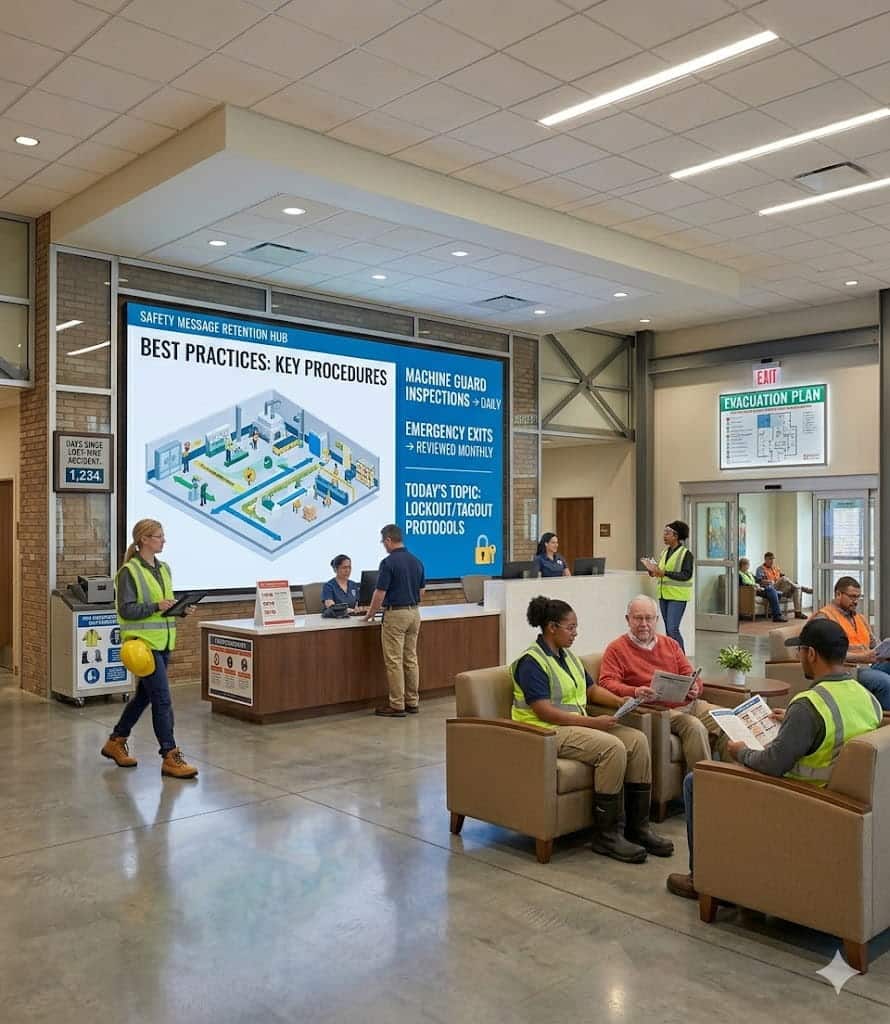
Every ignored safety message compounds the risk; these practices are how leading organizations close that gap.
Safety communication platforms need a designated owner, ideally someone in EHS or the risk team, so that messaging remains accurate, timely, and aligned with evolving compliance requirements.
Build urgency levels into your system that distinguish between routine reminders, elevated warnings, and emergency communication. As such, emergency messages should automatically replace all other content and display on every screen in the area.
Generic messaging loses impact fast. Deliver role-specific occupational hazard communication to the right teams in the right areas. Also, support multilingual content to ensure no worker is excluded due to language barriers
Rotate your messages and run seasonal campaigns. Fresh content breaks the cycle of message blindness and signals to your team that safety communication is active.
Use safety compliance monitoring tools to evaluate the effectiveness of your safety communication strategies. Track screen uptime, message frequency, zone-specific engagement, and acknowledgment rates. Use this data to refine your strategy and demonstrate program ROI to leadership.
Most workplace incidents don’t happen because policies are missing. They happen because of ignored safety messages; the right warning never reached the right person in time.
Digital safety communications changes the equation. The right platforms provide timely, targeted messages and data. That’s not merely an improvement in communication; it’s a measurable strategy for managing risk.
Start by evaluating your current safety communication strategy, take steps to close them before the next incident does it for you. Partner with S3 Technologies if you are ready.
When safety messages are ignored, the risk of workplace injuries, regulatory violations, and operational disruptions increases significantly. Over time, it can also weaken your organization’s safety culture.
Static signs tend to be passive; they rely entirely on employees to voluntarily stop and read them. Seeing the same sign in the same spot over and over can make them “invisible.”
They replace passive with active. Digital displays provide dynamic, timely, targeted content that employees are likely to engage with. Leaders can also measure engagement and collect feedback to evaluate their effectiveness or identify areas for improvement.
Hazards can appear and change quickly. Real-time messages let safety teams respond instantly, reducing the window for accidents and keeping everyone informed when it matters most.
You can track delivery rates, screen engagement, and acknowledgement data through your digital platforms. Pairing this data with incident frequency, near-miss reports, and compliance audit results gives leaders a clear picture of how well their safety program is working.
Bulletin boards, printed manuals, and posters near break rooms or production floors were once the standard for sharing safety messages …

Classroom learning today goes beyond textbooks and chalkboards. It’s interactive, visual, and powered by audiovisual (AV) tools that make lessons …
Attention is hard to capture and even harder to keep. In classrooms, students tend to lose focus when lessons feel …

The digital signage industry is expanding rapidly, with an expected reach of $35.65 billion by 2030. This growth demonstrates the …